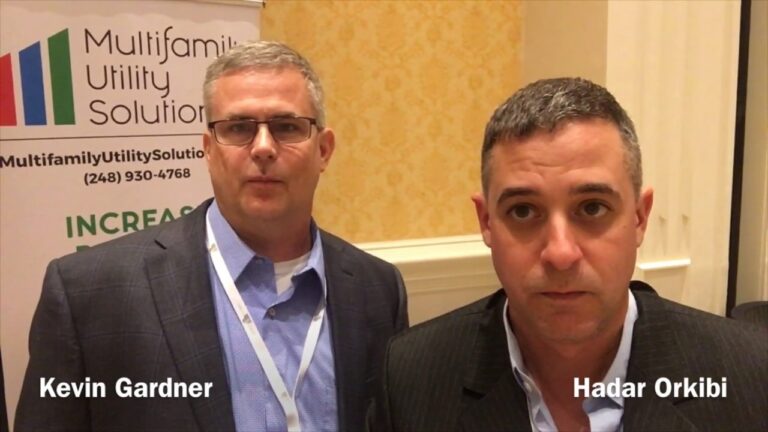
Sakar, host of Premium CASHFLOW PODCAST, interviews Kevin Gardner with Multifamily Utility Solutions. We discuss the many benefits property owners have realized by utilizing his company to negotiate their cable and internet contracts. By consistently aligning his company’s goals with those of his clients, Kevin ensures success in increasing the value of their investments.
00:00:07 – 00:01:20
Introduction to Premium Cash Flow Podcast
00:00:07 – 00:01:20
The podcast introduces Premium Cash Flow Real Estate Investing with host Sakar Ki. He explains that the show features guest experts who share their experiences, best practices, and market insights related to investing in multifamily apartment complexes. The focus is on how busy professionals can invest passively and hassle-free. Sakar also highlights his own extensive experience, owning millions in assets and completing thousands of value-add projects over 20 years.
00:00:39 – 00:02:35
Guest Kevin Gardner and Utility Solutions
00:00:39 – 00:02:35
The podcast episode begins with the host introducing Kevin Gardner from Multifamily Utility Solutions, a company that helps multifamily property owners save on various utilities such as electric, water, gas, cable, and internet through brokerage and cost-effective solutions. Kevin shares a brief background, explaining that he spent much of his career at Comcast, where he managed a department responsible for negotiating with multifamily properties.
00:02:01 – 00:05:57
Company background and revenue opportunities
00:02:01 – 00:03:42
The discussion begins with explaining how gaining access rights from family property owners can increase revenue for multifamily properties by boosting net operating income through both revenue growth and expense reduction. The speaker describes starting a company initially working with clients like Comcast and Charter, who were previously using external resources for negotiating property access but later shifted to in-house teams. This prompted the company to pivot and begin representing property owners directly.
00:03:42 – 00:05:28
The business evolved from focusing on cable and internet access rights to include other utilities. They added an energy brokerage service to help property owners in regulated states bid out electric and gas contracts. Additionally, they formed a referral partnership with a trash removal specialist, allowing cross-referrals between services. The conversation highlights the complexity of managing utility expenses and how specialized expertise can help property owners save money or generate additional income, such as by consolidating cable bills under a master account to create a win-win for both owners and residents.
00:05:28 – 00:05:57
The segment concludes with the idea of exploring cable and internet services further, emphasizing the potential benefits of managing master bills for these utilities. This approach could allow property owners to optimize costs and possibly increase revenue by structuring billing so residents pay slightly more than the owner’s cost, creating an additional income stream.
00:05:25 – 00:09:00
Cable and internet state regulations
00:05:25 – 00:07:20
The discussion addresses state regulations related to applying telecom solutions nationwide. It is emphasized that regulations depend on individual properties. Some states have franchises granting cable operators automatic access, but only if local municipalities or operators opt in. Smaller cable operators often have these arrangements, while major companies like Comcast, Spectrum, Cox, and Suddenlink typically negotiate individual property agreements.
00:06:39 – 00:09:00
There are no specific state or county requirements; each property negotiates independently with telecom providers. Cities can grant cable companies non-exclusive rights to operate publicly, but private property access requires permission from property owners. Property owners act as gatekeepers, granting ‘right of entry’ agreements that allow cable companies access without obligating owners to pay for services. Individual residents subscribing to services are customers, separate from property owners’ permissions.
00:08:25 – 00:15:07
Bulk pricing and revenue sharing models
00:08:25 – 00:10:38
The discussion explains a popular approach where cable companies offer property owners bulk-priced internet services at a discounted rate, which owners can then charge residents for, either through rent increases or amenity fees. This model benefits property owners by adding value for residents, reducing operational expenses, and simplifying billing with a single customer. The approach varies by property, and professionals assist owners in assessing the best options.
00:10:05 – 00:12:46
The conversation explores differences between service providers like Comcast and Verizon FiOS, noting that multiple providers and competition can lead to better deals for property owners. It highlights the business considerations involved, such as granting exclusive or non-exclusive access to wiring and marketing rights, which affect the value exchanged between providers and owners. Each property’s unique characteristics influence what deals and savings can be achieved.
00:12:16 – 00:15:07
The focus shifts to revenue generation through cable and internet services rather than direct savings. Property owners can earn money by allowing providers on-site, potentially increasing rents beyond the cost of service, though there is risk if owners pay for all units regardless of occupancy. Alternatives include receiving signing bonuses or door fees, or revenue-sharing arrangements tied to marketing exclusivity. The segment concludes by transitioning to considerations for leveraging gas and electric services, including regulatory aspects.
00:14:35 – 00:20:35
Gas and electric deregulated vs regulated markets
00:14:35 – 00:16:18
The speaker explains the differences between deregulated and regulated energy markets, highlighting that regulated markets have fixed rates set by state boards, while deregulated markets offer choices among multiple providers. Using the example of living outside Cleveland, Ohio, they discuss how homeowners and multifamily property owners can leverage energy usage and rate competition to potentially save money. The importance of factors like the number of units, access types, and resident payment responsibility are emphasized in assessing energy costs.
00:15:44 – 00:17:30
To explore savings opportunities, recent electric or gas bills are gathered and submitted to an electric broker who specializes in competitive bidding. Savings depend largely on usage volume, and not every case results in cost reduction. The primary factor driving savings is the offered energy rate, with no additional incentives typically involved.
00:16:54 – 00:18:27
The discussion covers the choice between fixed and variable energy rates. Fixed rates provide budgeting certainty but can lock consumers into higher prices if rates drop, while variable rates carry risk similar to stock market fluctuations. The conversation also touches on seasonality in energy pricing, noting that rates often depend more on when the energy contract was acquired than on actual usage timing.
00:17:55 – 00:19:29
Energy price fluctuations are compared to gas station pricing, where the cost depends on the purchase time rather than consumption time. This principle applies to residential electric and gas contracts. The speaker then describes their customer base, ranging from small owners just starting with a few duplexes to large portfolio owners managing thousands of units.
00:19:01 – 00:20:35
The speaker shares an anecdote about a client who started with a few duplexes and grew to nearly 500 units, illustrating the growth potential in the business. Their largest clients manage portfolios of 7,000 to 10,000 units. Larger portfolios take longer to manage due to scale, while smaller clients with fewer properties can be serviced more quickly.
00:20:05 – 00:24:03
Client profiles and service engagement
00:20:05 – 00:21:45
The discussion covers managing a large portfolio of 75 to 100 properties with 8,000 to 10,000 units, emphasizing the complexity of due diligence and contract management. The service involves engaging on a per-property or portfolio basis, reviewing current utility bills such as electric, gas, cable, and internet, and formulating a plan. This includes conducting due diligence, potentially running a bidding process with vendors, and ultimately presenting solutions to multifamily property owners.
00:21:12 – 00:22:45
The conversation highlights the importance of understanding property owners’ business goals, as advice varies depending on whether they plan to renovate and sell soon or hold the property long-term. Aligning goals with clients is crucial for effective service. The payment model is commission-based, with no retainers or hourly fees, ensuring that fees are only earned if savings or profits are realized, fostering a win-win relationship.
00:22:16 – 00:24:03
Fee structures vary depending on the utility type. For cable services, fees are a sliding percentage of savings, decreasing with larger unit counts. For electric and gas, a small finder’s fee is included in the rate paid to suppliers, with no incentive to inflate costs. The approach ensures clients receive the best and lowest possible rates, maintaining transparency and alignment of interests.
00:23:25 – 00:26:11
Contact info and additional resources
00:23:25 – 00:25:30
The discussion emphasizes the importance of addressing any remaining questions, especially utility-related ones, highlighting a strong network of partners and experts to provide answers. Kevin shares contact details and the website multifamilyutilitysolutions.com, where listeners can find additional resources including a list of deregulated electric and gas markets. This serves as a valuable tool for exploring potential savings and opportunities to engage with utility experts.
00:24:59 – 00:26:11
The host, Sakar C, invites listeners to visit premiumcashflow.com for more podcast episodes and information on passive investments. He encourages interested parties to reach out for a call to explore potential partnerships and synergy. The segment concludes with thanks to Kevin and an invitation for listeners to subscribe for updates and more expert interviews.