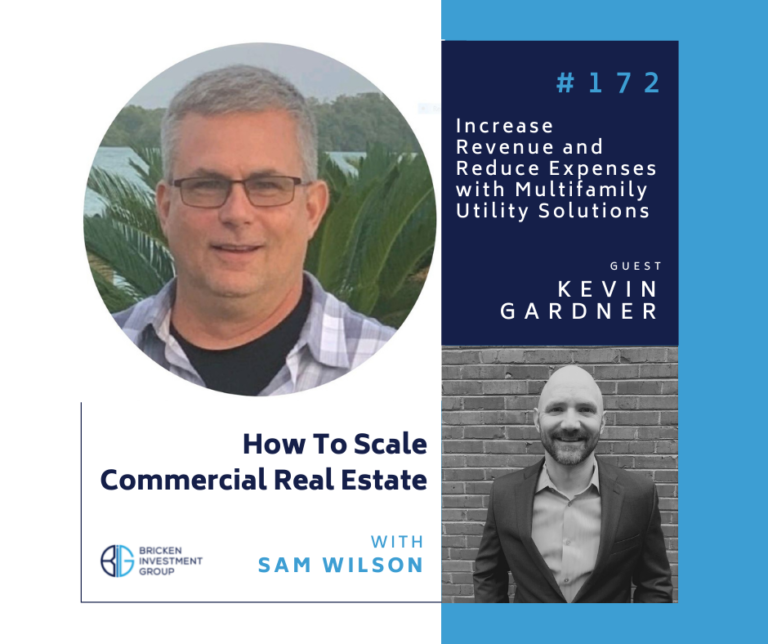
After nearly 20 years with Comcast, including time as the Midwest Division Vice President of Sales and Marketing and as an Area Vice President, Kevin left the large cable operator side of the business to oversee Sales, Marketing and Customer Care at James Cable during a time James was trying to liquidate their properties. James, being a much smaller MSO (Multiple System Operator) with systems throughout the southern and western United States, gave Kevin additional operational experience within the cable industry. Throughout his career, Kevin was responsible for managing the team that negotiated telecommunications access agreements for these MSOs for Multifamily Property Owners, Kevin’s experience has resulted in favorable contract terms related to their telecommunications agreements. Additionally, TMS clients have realized significant savings from TMS’s department that specializes in negotiating energy and waste agreements on their behalf.
If you’re interested in real estate investing, particularly passive real estate investing Dwaine Clarke has the resources you need to achieve financial freedom and wealth. If you are an accredited investor you can partner with Dwaine in a passive investment opportunity, receiving all the benefits of an active owner without being an active owner. http://dwainelclarke.com/invest-with-dwaine Thank you and I appreciate you watching this video. Please like, subscribe, and share with others that you may find this valuable. Your comments are useful and helps us generate better quality content based on your feedback. — Subscribe to my channel here: https://www.youtube.com/channel/UCb66-jA-WR4-LlJqp8Sn2wg?sub_confirmation=1 —
Dwaine L. Clarke is the Founder and Managing Partner of Jackson Clarke Capital Partners a real estate investment firm focused on the acquisition and re-positioning of Apartment properties in major metropolitan markets. http://jacksonclarkegroup.com In addition to Jackson Clarke Capital, Dwaine is also the Founder and President of GCT Net Lease an investment real estate services firm exclusively focusing on Single and Multi-Tenant Net Lease Properties. The firm provides a full range of brokerage and advisory services nationwide to High Net worth Investors, Developers, REITs and Institutional Investment Funds. http://buynnnproperties.com Dwaine is also the host of Wealth Through Real Estate Investing and Small Business, Big Ideas Podcasts. He is also the author of three best selling real estate investing books. — Follow Me Online Here: Instagram: https://www.instagram.com/dwainelclarke/ Facebook: https://www.facebook.com/DwaineClarkeOfficial LinkedIn: https://www.linkedin.com/in/dwaineclarke/ Website: http://dwainelclarke.com Twitter: http://twitter.com/dwaineclarke Medium: http://medium.com/@dwaineclarke Sound Cloud: https://soundcloud.com/dwaineclarke Podcast: http://dwainelclarke.com/podcast Subscribe to my VIP Newsletter for upcoming investment opportunities, exclusive content and giveaways here: http://dwainelclarke.com/VIP
00:00:00 – 00:01:58
Importance of cable contracts for property owners
00:00:00 – 00:01:58
The discussion begins with the importance of cable contracts in property management, emphasizing that property owners do pay for cable services as they must grant permission for cable companies to serve residents. The podcast ‘Wealth Through Real Estate Investing’ introduces itself as a source of practical strategies for building long-term wealth and financial freedom through real estate. The host, Dwayne Clark, welcomes guest Kevin Gardner of Multifamily Unit Utility Solutions, who brings nearly 20 years of experience with Comcast to the conversation about increasing revenue and reducing utility expenses in multifamily properties.
00:01:15 – 00:04:30
Kevin Gardner’s telecom and real estate background
00:01:15 – 00:02:48
Kevin, a Midwest division vice president of sales and marketing with extensive experience negotiating telecommunication access agreements for cable companies with multifamily property owners, founded Telecom Marketing Strategies and its parent company Multifamily Utility Solutions in 2007. These companies aim to help property owners and third-party vendors understand the cable operator perspective, maximize business opportunities, and generate additional income. The conversation begins with an introduction and a brief overview of Kevin’s background and his company’s purpose.
00:02:18 – 00:04:30
Kevin recounts his career journey starting as a door-to-door sales representative at Comcast, progressing through various promotions to become a vice president of sales and marketing responsible for negotiating rights with property owners for Comcast’s presence in multifamily properties. Eventually choosing an entrepreneurial path, he founded his own company initially contracted by Comcast and Charter to negotiate on their behalf. As these companies brought negotiation in-house, Kevin pivoted to representing property owners, growing his business by helping them benefit from utility and cable agreements.
00:03:58 – 00:06:53
Benefits of cable contracts to multifamily owners
00:03:58 – 00:06:53
The discussion explains the benefits and challenges of utility contracts for multifamily property owners. Electric and gas utility opportunities are limited due to deregulation and consumption-based billing, making them less appealing in all-bills-paid properties. Cable contracts form the majority of the business because cable companies cannot serve residents without property owner permission. Unlike homeowners who grant access individually, multifamily residents cannot authorize cable companies to access private property, so owners must have right of entry agreements. The speaker highlights the importance of engaging with experts early to navigate these contract nuances.
00:06:16 – 00:08:55
Engaging early to review cable contracts
00:06:16 – 00:08:22
The discussion focuses on the challenges of locating old cable contracts during due diligence for property transactions. Many contracts are outdated, sometimes decades old, and often missing from due diligence documents due to multiple ownership and cable company changes over time. This makes it necessary to proactively investigate with cable companies to verify the existence of valid agreements, as documents can easily be lost or misplaced during transactions.
00:07:49 – 00:08:55
The conversation shifts to financial opportunities involving utility companies, particularly cable TV and internet providers. Instead of focusing on cost savings, the emphasis is on increasing revenue through payments such as signing bonuses or door fees, which cable companies pay in exchange for long-term agreements.
00:08:22 – 00:11:56
Types of cable contract payments and revenue share
00:08:22 – 00:11:56
The speaker explains different types of agreements made with cable companies, starting with an exclusive marketing agreement that offers a one-time payment per door within 90 days of signing. Another model is a revenue share, which pays commissions based on residents’ subscriptions, usually quarterly and on a sliding scale. The most popular arrangement now is a hybrid model combining both upfront payment and revenue share. Initially, cable companies only offered door fees because revenue share affected operating cash flow negatively. However, the hybrid model emerged to align incentives, encouraging property owners to promote cable services actively since they benefit from ongoing revenue. This model balances immediate compensation with a vested interest in growing the business. The speaker also briefly mentions bulk versus non-bulk contracts, introducing the concept of non-bulk as individually billed service or right of entry.
00:11:27 – 00:15:22
Explaining bulk vs non-bulk cable contracts
00:11:27 – 00:13:06
The speaker explains the difference between individual and bulk cable or internet service billing for residents. In individual billing, residents choose their provider and pay them directly. In bulk billing, the property pays one discounted rate to the cable company for all units, offering services as an amenity included in rent. The idea is that the property can raise rent by more than the discounted cost, making it potentially profitable.
00:12:33 – 00:13:57
Bulk billing shifts the responsibility and risk to the property owner, who must pay for every unit regardless of occupancy. While residents may see value in discounted bundled services, not all will appreciate paying for cable if they prefer alternatives like streaming. The property owner must carefully consider resident preferences and market conditions before committing.
00:13:30 – 00:14:50
The decision to offer bulk cable or internet depends heavily on the market and resident demographics. In competitive rental markets or properties struggling with occupancy, bundled services can be a valuable amenity that justifies higher rents. Property owners should evaluate their specific situation to determine if bulk services will attract tenants and enhance revenue.
00:14:24 – 00:15:22
Every property is unique, requiring tailored decisions about cable contracts and amenities. Factors such as the resident profile, property type, and market dynamics must be analyzed individually to make the best choice for offering bulk or individual services.
00:14:52 – 00:19:28
Using cable contracts to boost property value
00:14:52 – 00:15:50
The discussion begins with the importance of understanding a property’s long-term financial goals when evaluating revenue opportunities from cable contracts. Key questions include whether the aim is to maximize ongoing monthly profits or to increase the property’s overall value for refinancing or investment purposes.
00:15:21 – 00:16:49
A specific example is given of a Tennessee property owner who wanted to maximize upfront revenue from a cable contract to fund property improvements after raising rents to market rates. This highlights how revenue from such contracts can be strategically used to enhance property value and justify rent increases.
00:16:23 – 00:17:42
The conversation emphasizes that improvements funded by cable contract revenue add tangible value, unlike rent increases without upgrades. It underscores the importance of due diligence to verify existing contracts and their value extraction potential before finalizing property deals, using this as a crucial step to secure capital for property improvements.
00:17:14 – 00:19:03
A cautionary story is shared about a client who discovered too late that they were locked into a costly 10-year cable agreement signed by the previous owner, which severely limited their financial benefits. This example stresses the necessity of early contract review during property acquisition to avoid unfavorable long-term commitments.
00:18:28 – 00:19:28
The segment concludes by advising property owners and buyers to engage experts early in the process to uncover all possible revenue opportunities from cable contracts. It also suggests taking proactive steps, such as directly inquiring about existing contracts, to maximize potential income streams from these agreements.
00:18:58 – 00:22:02
How Multifamily Utility Solutions helps owners
00:18:58 – 00:20:35
The speaker explains the process of verifying if a property owner has an existing agreement with a cable company. Even if the owner is unaware, the company can investigate and potentially uncover agreements that benefit the owner. Approximately half of the properties are already under contract, which limits new opportunities, but owners are encouraged to contact the company regardless since the research and verification services are provided at no cost.
00:20:02 – 00:21:12
If a new agreement opportunity is identified, the company enters into a commission-based contract with the property owner, earning a percentage of the revenue secured from the cable company. This arrangement ensures that the company only gets paid when the owner receives money, creating a win-win situation. The sales team operates solely on commissions, emphasizing the mutually beneficial nature of the service.
00:20:37 – 00:22:02
The company maintains a proprietary database to track all cable contracts, including expiration dates, enabling proactive communication with property owners. They send timely reminders to ensure owners do not miss important renewal windows, which often require 60-day notices. This specialized focus on cable contracts allows the company to manage these details efficiently, protecting owner interests and maximizing potential revenue.
00:21:33 – 00:24:28
Opportunities in deregulated gas and electric utilities
00:21:33 – 00:23:59
The discussion focuses on opportunities in deregulated states for utilities like gas and electricity, where usage above a certain benchmark (30,000 kilowatts per year) may allow property owners to benefit from better rates. The service offered is free: property owners provide recent bills, which are reviewed by a broker who attempts to find a lower rate. If successful, the property owner can switch without any fees. An example from Illinois illustrates potential savings for a 60-unit property during due diligence, although that particular deal did not close. The service helps property owners understand cost implications and potential savings.
00:23:33 – 00:24:28
The speaker outlines the geographic reach of their utility services, noting that some states allow both electric and gas deregulation, while others only one or the other. However, in regulated states like Tennessee, rates are fixed by the state with no opportunities for savings or alternative providers. The importance of understanding state-specific regulations is emphasized.
00:24:01 – 00:26:35
Building a team for utility and cable contract success
00:24:01 – 00:25:54
The discussion emphasizes the importance of having a strong team, including attorneys, CPAs, brokers, and specialists, when managing large properties. The speaker highlights their extensive experience with negotiating contracts, particularly with cable companies, and the value of having knowledgeable advisors to identify cost savings and revenue opportunities. They also mention working closely with legal partners to review contract clauses, although they do not provide legal advice themselves.
00:25:26 – 00:26:35
They discuss how to get in contact for multifamily property owners interested in these services. The key factor is the number of units, with cable companies typically focusing on properties with at least 75 to 100 units for meaningful engagement. Larger portfolios, such as those with 200 units or more, are ideal for leveraging such expertise.
00:26:00 – 00:28:21
Minimum unit requirements and combining properties
00:26:00 – 00:28:21
The speaker discusses leveraging multiple properties together to increase investment potential, using examples like combining a 50-unit property with others to gain leverage. They share an experience of collaborating with several property owners in Dallas to present combined assets. The speaker also expresses passion for the multifamily real estate industry, recounting a story about mentoring a young investor who quickly grew from purchasing a small property to closing on 65 units within a year. Emphasizing long-term relationships, they highlight their willingness to provide free advice and even walk away from deals that don’t seem strong.
00:27:46 – 00:30:22
Long-term relationships benefit multifamily investors
00:27:46 – 00:29:16
The speaker discusses a real estate deal in Louisville involving multiple property owners who combined their units to negotiate a better deal a year later. They emphasize the importance of building long-term relationships based on trust, respect, and doing the right thing for clients to maintain strong business connections.
00:29:16 – 00:30:11
The conversation highlights the value of engaging early to explore potential projects and turning them into mutually beneficial opportunities. Reducing utility expenses and increasing revenue are identified as key business goals. The guest, Kevin, expresses appreciation for the discussion and encourages listeners to reach out for advice on their projects.
00:29:44 – 00:30:22
The episode concludes with a call to action for listeners to subscribe, leave reviews, and visit related websites and social media for additional real estate investing content and resources.