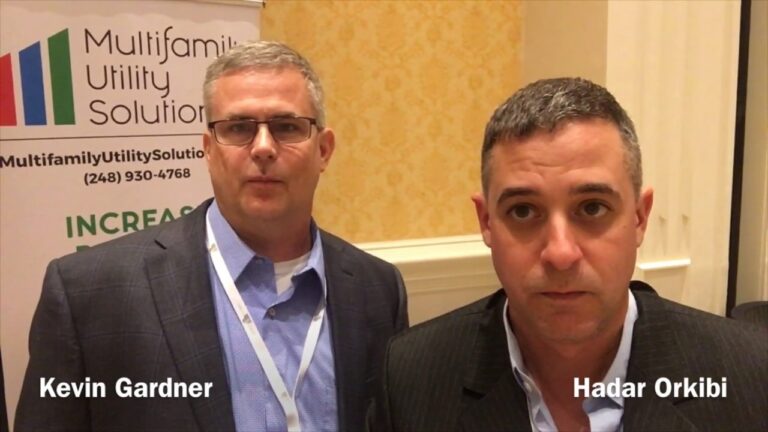
Kevin and MVP Real Estate Podcast host Marcus Perleberg meet once again to discuss how Multifamily Utility Solutions (MUS) helps property owners manage their utilities better to realize expense savings and/or generate revenue. Kevin provides information on the different types of internet and cable agreements and how each can benefit property owners based on their investment goals.
00:00:01 – 00:01:13
Introduction and guest welcome
00:00:01 – 00:01:13
The episode begins with a welcome to the MVP Real Estate Podcast, season three, episode 17. The host introduces Kevin from Multi-Family Utility Solutions, marking his second appearance on the show. Unlike his previous informal setting in the back of a truck, this time the interview is conducted in an office environment. The host thanks Kevin for returning and sets the stage to dive into the discussion.
00:00:37 – 00:02:21
Services offered to multi-family property owners
00:00:37 – 00:02:21
The speaker describes their services, which focus on helping multi-family property owners—including mobile home communities and apartments—increase their net operating income by better managing utilities. They highlight overlooked opportunities such as obtaining money from cable and internet companies, competitive bidding for deregulated electric and gas services, and cost savings on trash removal. These improvements lead to higher asset values.
00:01:45 – 00:03:49
Importance of reviewing subscriptions in due diligence
00:01:45 – 00:03:49
The speaker discusses a property that had been on the market for over a hundred days without interest due to errors in the listing sheet, particularly incorrect numbers related to subscriptions like dumpster rentals and leased equipment. Upon due diligence, the investor discovered it was an excellent deal because these overlooked subscriptions collectively added significant value. The speaker emphasizes that small items often ignored during due diligence can materially impact the value, citing examples such as electric payments and contracts for cable and internet services, which are frequently overlooked but important to verify.
00:03:18 – 00:04:58
Engaging early to avoid surprises in utility contracts
00:03:18 – 00:04:58
The discussion highlights the importance of early engagement in property due diligence, especially since historical records in older communities might not always be included in due diligence packages. The speakers emphasize that it is better to investigate thoroughly before purchasing to avoid surprises and potential issues later. They stress that buyers should not overlook secondary costs or minor details when investing in high-value assets, as these factors are crucial for informed decision-making.
00:04:24 – 00:09:01
How utility management varies by market and property type
00:04:24 – 00:06:24
The discussion explains that clients are not simply buying internet services directly but rather bundled utility management packages tailored to different industries. The company represents property owners to help manage utilities for cost savings or revenue generation. Market differences affect service offerings, with deregulated markets like Ohio providing more opportunities in electric and gas utilities compared to less competitive markets such as Wisconsin or Colorado. Internet and cable TV services depend heavily on market competitiveness, with active work ongoing in competitive regions like Dallas Fort Worth, while less activity occurs in places like Idaho.
00:05:42 – 00:07:56
The focus shifts to differences in single-family versus multi-family rental properties regarding utility services. Single-family rentals allow tenants to choose and pay for their own services independently, whereas multi-family buildings often require landlords to provide bundled services. There’s interest in exploring multi-family contracts, which can be outdated and expensive due to long-term incremental rate increases. New contracts might offer more competitive pricing. The company prioritizes understanding property owners’ goals to tailor utility agreements accordingly, highlighting the complexity and evolving nature of managing multi-family utility services.
00:07:25 – 00:09:01
The conversation covers investment strategies related to property ownership and utility management. Long-term owners may focus on generational wealth, while others buy B-class properties to upgrade and reposition them as A-class, often using syndication funds with defined repayment periods. These investors typically hold properties for a few years before selling at a higher value and repeating the process. Understanding the owner’s investment goals is crucial for recommending appropriate utility agreements. Additionally, the distinction is noted that single-family residents usually pay for their own utilities, influencing service arrangements.
00:08:30 – 00:11:11
Bulk agreements as amenities for residents explained
00:08:30 – 00:10:39
The speaker explains the concept of a bulk agreement, where a property owner provides a service like cable as an amenity to residents. This is optional and depends on the owner’s long-term goals and the property’s class. For A or B-class properties aiming to upgrade, committing to bulk agreements might be beneficial. However, for C-class properties focused on revenue generation, it might be better not to include such amenities due to rent caps. The discussion also highlights that recommendations are tailored to each client’s situation.
00:10:06 – 00:11:11
Using Cleveland, Ohio as an example, the speaker describes how cable providers operate under non-exclusive franchises that grant them access to public easements. Homeowners can individually sign up and grant access to their property, but in multi-family properties, the owner controls access. The property owner can enter into a bulk agreement to provide the service as an amenity, acting as the gatekeeper and managing contracts with the service provider.
00:10:38 – 00:14:34
Access agreements and revenue opportunities with providers
00:10:38 – 00:12:32
The discussion focuses on property owners providing access to service providers through access or exclusive marketing agreements, which can generate revenue without added expenses. It emphasizes understanding the tenant base and evaluating if offering such amenities is financially viable, considering whether increased rent can cover the additional costs. For C-Class properties, this might be difficult due to tenant demographics and existing access to connectivity subsidies.
00:11:52 – 00:13:26
The conversation highlights government programs like the Affordable Connectivity Program that subsidize internet costs for tenants on government assistance, meaning tenants might already have their connectivity costs offset. Property owners need to carefully analyze whether charging extra for such amenities is fair or redundant, as tenants cannot be charged more if their lease includes these services but they receive subsidies.
00:12:56 – 00:14:34
The speakers discuss how property owners shape the culture of their buildings through amenities and management style, which impacts tenant satisfaction and occupancy. They stress the importance of understanding the tenant demographic and market to avoid implementing costly amenities that could hurt occupancy rates. Ultimately, maintaining or increasing occupancy is critical, as losing tenants could outweigh any revenue gained from added services.
00:13:59 – 00:17:01
Trends and benefits of offering internet as a bulk amenity
00:13:59 – 00:16:20
The discussion focuses on the growing trend of bulk internet services being offered as an amenity by property owners. Providers prefer bulk arrangements because they can cover 100% of units without individual setups, reducing operational costs and simplifying billing. This model benefits providers by improving their customer counts and financial reporting. Property owners are encouraged to offer bulk internet as it can generate additional revenue, though it carries some risk due to potential liability for service payments over multiple years. The trend is particularly active in markets like Dallas-Fort Worth with Class A properties adopting this model.
00:15:47 – 00:17:01
The conversation transitions to the potential for property owners to earn extra income from services offered alongside rent. There is also a mention of infrastructure considerations, such as easements and city gatekeeping, affecting how internet service lines are managed on properties.
00:16:23 – 00:19:36
Exclusive marketing rights and provider competition
00:16:23 – 00:17:31
The discussion covers how to manage access for multiple wired internet providers, such as Spectrum and AT&T, on a property. If both providers are present, residents can be given a choice between them. Properties with existing agreements, usually lasting 10 years with automatic renewals, may receive compensation even if the service is not offered as a bulk amenity.
00:16:58 – 00:18:02
For properties with agreements over 10 years old, these often auto-renew and can be renegotiated to secure compensation. Even if the property doesn’t offer a bulk service, residents can be allowed to select their preferred provider, with negotiations possible with both AT&T and Spectrum.
00:17:30 – 00:18:36
While exclusive access cannot be granted if both providers are present, exclusive marketing rights can be assigned to one provider as the recommended choice. This can generate compensation as a percentage of revenue. Non-exclusive marketing can also be arranged, but agreements must not conflict.
00:18:03 – 00:19:12
The availability and type of service depend on market conditions and provider offerings. Providers like AT&T may upgrade from DSL to fiber, especially in larger properties due to higher return on investment. Compensation models vary based on exclusivity and marketing arrangements.
00:18:37 – 00:19:36
This arrangement applies only to wired providers, as wireless providers use public airwaves and do not rely on property infrastructure. Examples include Verizon’s wireless home internet devices, which operate independently of property agreements and access.
00:19:07 – 00:21:41
Wired vs wireless providers and internet delivery challenges
00:19:07 – 00:20:40
The speakers discuss the use of public airwaves for distributing internet via small Wi-Fi hotspot boxes, especially for temporary job sites. They consider the practicality of these devices, noting that in some flipped houses where cell service is poor, the hotspots become ineffective, functioning like paperweights until a signal is available elsewhere.
00:20:08 – 00:21:41
They compare the limited bandwidth of hotspot devices to more robust services like Spectrum, emphasizing the increasing demand for streaming video which consumes significant internet bandwidth. One speaker shares an experience of internet interruptions during video calls due to bandwidth exhaustion. They conclude by highlighting that while there are opportunities for revenue and savings, the suitability of internet solutions varies by property, and major providers are pushing for bundling services.
00:21:12 – 00:24:28
Evaluating amenities and tenant base for property upgrades
00:21:12 – 00:22:45
The speaker discusses the importance of evaluating amenities based on the tenant base and location. They use the example of installing an Olympic-sized swimming pool in an Alaskan property, which might not be a cost-effective or practical amenity despite increasing rent. The key is understanding whether the amenity will help fill units or align with the property’s goals.
00:22:14 – 00:23:51
The speaker explains a strategy where property owners intentionally reduce occupancy to change tenant demographics and improve property class, such as moving from C-Class to B-Class. They mention using measures like 24/7 private security to discourage problematic tenants, which initially lowers occupancy but ultimately attracts a different tenant culture and improves the property overall.
00:23:20 – 00:24:28
The discussion continues on how short-term occupancy drops can lead to long-term asset improvement. The speaker praises internet and cable companies for understanding both amenities and leasing structures, noting that they can charge additional fees per unit seamlessly, something property owners should consider when adding services as amenities.
00:23:54 – 00:26:30
Lease ramp periods for bulk service cost recovery
00:23:54 – 00:25:38
The discussion explains the concept of a one-year ramp period in lease renewals, where leases are renewed gradually over a 12-month period to avoid financial strain from immediate rent increases on all units. This staggered approach helps landlords recoup costs incrementally rather than bearing the full financial impact at once, which is a favorable practice especially in bulk lease scenarios.
00:25:02 – 00:26:30
The speaker contrasts the flexibility of lease ramp periods with the rigidity often experienced with cable companies, noting that cable companies rarely accommodate customer needs due to inflexible systems. Drawing from personal sales experience in facility services, the speaker highlights the importance of understanding contract details and loopholes, emphasizing how contract terms, such as annual price increases, accumulate over time and affect final costs.
00:26:00 – 00:28:18
Negotiating contracts and commission structure
00:26:00 – 00:28:18
The speaker explains their business model, which involves helping clients negotiate exclusive marketing agreements tied to commission based on the owner’s revenue, aligning their earnings with client success. They aim to secure a substantial one-time signing fee as well as a percentage of ongoing revenue. Additionally, they work to lower rates and manage annual increases effectively, highlighting a recent case where reducing the annual increase by one percent over five years significantly decreased overall costs. The discussion also mentions emerging personal finance apps that track and allow users to manage subscription payments easily.
00:27:43 – 00:28:41
Apps for managing and canceling subscriptions
00:27:43 – 00:28:41
The speaker describes an analogy of an app that meticulously reviews and cancels unnecessary subscriptions to help clean up finances, particularly related to utilities. They emphasize the importance of leverage in managing electric and gas expenses, noting that this aspect is crucial but often less discussed.
00:28:12 – 00:30:44
Factors influencing utility savings and pricing
00:28:12 – 00:30:44
The discussion focuses on how the size and features of a property impact electricity usage and rates. Smaller properties with fewer amenities like pools or workout facilities use less electricity, which may make them less attractive for preferred electric rates. In contrast, larger properties with multiple amenities have higher usage and may qualify for better rates. The variability in property characteristics, such as size, age, class, and market, means no two properties are alike, making it difficult to generalize savings or earnings. Investment goals, whether flipping or holding, also influence the evaluation process.
00:30:13 – 00:31:24
Evaluating properties uniquely for utility strategies
00:30:13 – 00:31:24
The speaker discusses the niche yet important area of solar energy strategy, highlighting a personal experience of installing solar panels on their roof. They emphasize the financial incentive provided by the municipality, which pays for excess energy sent back to the grid, effectively making the installation cost-free or no money down.
00:30:48 – 00:33:50
Solar energy integration and market considerations
00:30:48 – 00:32:18
The discussion focuses on integrating solar energy into service offerings, highlighting partnerships with brokers specializing in electric, gas, and solar solutions. Solar experts recommend considering solar installation before purchasing a property to include costs in the purchase price, avoiding the need to seek additional investment afterward. The team collaborates with various specialists to cover all utility needs effectively.
00:31:49 – 00:33:50
Solar viability varies by market due to factors like rebates and electric company policies on buying back energy. The team operates like a cooperative with subject matter experts in different utility areas to provide comprehensive solutions. They advise clients to evaluate solar options during due diligence before finalizing property purchases to ensure proper planning and integration.
00:33:21 – 00:35:07
Due diligence checklist for utility contracts in acquisitions
00:33:21 – 00:35:07
The discussion focuses on reviewing contracts related to multi-family properties, emphasizing the importance of obtaining utility contracts and payment histories from previous owners. A checklist of 13 to 14 key items, including utility contracts, is used during due diligence to verify financial figures. The conversation also touches on the variability of utility services, noting that cable and internet are widely available, while electric and gas markets are more regulated and less universally accessible.
00:34:31 – 00:36:15
Market differences in deregulation and provider availability
00:34:31 – 00:36:15
The speaker discusses challenges in securing deals with providers, especially in rural areas where options are limited, compared to major metropolitan areas with multiple competing providers. They explain that deals vary significantly by location, such as Dallas-Fort Worth versus Philadelphia, Cleveland, or Chicago. The conversation then shifts to business practices, highlighting that contacting building owners typically involves cold calling and referrals, with many referrals received due to good client treatment. Marketing efforts are also mentioned.
00:35:35 – 00:39:04
Marketing strategies and challenges entering multi-family space
00:35:35 – 00:37:21
The discussion focuses on marketing strategies, including email marketing, LinkedIn, and podcast promotion, to reach potential clients in the challenging multi-family real estate market. The speakers note that multi-family properties are less frequently sold compared to single-family homes because owners tend to hold them longer. Syndication, repositioning, refinancing, and reselling of properties have become more popular in recent years, though the market remains competitive with fewer owners.
00:36:46 – 00:39:04
They emphasize the broad opportunities available across the U.S. multi-family market but highlight the challenge of connecting with the right owners. Setting up effective communication systems and working with commercial brokers is crucial, though many brokers lack connections to multi-family property owners. The conversation also touches on geographic preferences, with some preferring local deals for easier self-management, while others use remote tools like email, Zoom, and phone to conduct deals nationwide. Contract variations across states are noted, especially when dealing with properties in different regions.
00:38:26 – 00:40:56
Incumbent providers and infrastructure investment impact
00:38:26 – 00:40:56
The discussion focuses on choosing between incumbent service providers like Spectrum, Comcast, and AT&T versus new entrants for property internet and cable services. Incumbents have already invested capital in the property, minimizing disruption to residents and maintaining customer comfort. New providers face significant upfront infrastructure costs, which affects their financial return and reduces what they can offer property owners for exclusive marketing rights. The incumbents, being large, stable companies, are expected to remain relevant and technologically competitive in the near future.
00:40:22 – 00:43:42
Advantages of established major providers
00:40:22 – 00:42:27
The discussion compares large service providers to smaller ones, noting that while bigger companies occasionally have service issues, they generally offer more reliable and extensive coverage. Using an airline analogy, the speaker explains that popular providers like Delta have a higher chance of service errors simply due to their larger customer base, but they have ample local resources to fix problems more effectively than smaller independent companies.
00:41:58 – 00:43:42
The speakers share personal experiences with service providers, acknowledging common frustrations such as long wait times and complicated customer service processes. One speaker highlights the challenge when internet and mobile services are handled by separate entities, causing inefficient transfers and communication. They emphasize the importance of informed decision-making for business owners when choosing service contracts, balancing pros and cons to best meet their business needs.
00:43:06 – 00:44:41
Challenges in customer service and business class distinctions
00:43:06 – 00:44:41
The speaker discusses the challenges caused by having multiple specialist groups handling different areas, which can be frustrating for customers. They emphasize that these issues stem from the customer’s internal systems needing upgrades. Despite the frustration, the speaker acknowledges the improvements made so far and hopes for continued integration and progress. They also mention a personal interest in reading and introduce a book, signaling a shift in the conversation.
00:44:12 – 00:49:04
Personal development and recommended books
00:44:12 – 00:45:56
The speakers discuss the book “The Gap in the Game,” which focuses on measuring personal progress by looking back at how far you’ve come rather than how far you have to go. One speaker shares about their own book, “Change Your Thinking, Ignite Your Life,” inspired by their recovery from alcoholism and experiences giving advice in support groups. They also reflect on their childhood dislike of reading, joking about struggling even with cliff notes.
00:45:30 – 00:47:35
The conversation returns to the concept of living in “the game” versus “the gap,” emphasizing that being mindful of one’s progress leads to greater happiness and productivity. The speakers share personal acknowledgments of struggling with this mindset. One mentions “The Subtle Art” as a transformative book that shifted their mindset from employee to self-employed, highlighting the impact books can have on personal growth.
00:47:04 – 00:49:04
The discussion shifts to lifestyle changes, including giving up golf and drinking to free up time for reading and business pursuits. One speaker praises David Goggins’ book “Can’t Hurt Me,” describing his extraordinary resilience and achievements despite health challenges. They note Goggins’ intense, nonstop drive and his candid, unfiltered appearances, such as on the Joe Rogan podcast. The speakers express enthusiasm for sharing and linking these influential books in the show notes.
00:48:36 – 00:51:42
Future industry trends and FCC regulations
00:48:36 – 00:51:42
The discussion focuses on the evolving technology landscape in the industry, emphasizing the importance of partnering with larger, established companies that can introduce new advancements and ensure residents have access to the latest technology. The trend is moving toward wireless integration of phones, internet, and video services. Recent FCC regulations prohibit granting exclusive rights to a single provider, ensuring consumer choice and preventing monopolies. Broadband remains the crucial service for connectivity, even as traditional cable TV declines and streaming services become more prevalent. The speaker encourages multi-family property owners to embrace these agreements to stay competitive and meet residents’ connectivity needs.
00:51:10 – 00:52:49
Value and risks of signing bulk service contracts
00:51:10 – 00:52:49
The discussion centers on selecting the right contracts for properties, emphasizing that the goal is to help clients generate revenue and increase asset value without imposing harmful agreements. One participant reflects on the idea of an a la carte TV service, where viewers could select only specific channels they want, such as just 10 channels excluding unwanted ones like Hallmark. However, it is noted that such customization wouldn’t significantly impact bulk buying for larger buildings, since different units have varied channel preferences. The conversation also touches on how companies like Paramount offer certain channels, influencing bulk purchasing arrangements.
00:52:16 – 00:55:25
Limitations of a la carte TV channel services
00:52:16 – 00:54:13
The discussion explains why fully customizable, à la carte streaming services are currently impractical. Operationally and logistically, providers are not equipped to offer individualized channel selections. Additionally, networks like ESPN rely on a per-home fee paid by providers. If many homes drop the channel, the network loses significant revenue, which diminishes its ability to maintain the same level of programming and service quality.
00:53:33 – 00:55:25
The conversation continues with the economic reasoning behind channel packaging. If channels were sold individually, networks would need to charge higher fees per household to sustain their offerings, likely making à la carte pricing comparable in cost to current bundled packages but with fewer channel options. Bundling channels together creates distribution efficiencies and offers consumers more content at a better price, similar to the discounts gained from buying in bulk. The segment ends noting the complex ownership structures behind TV networks, such as ESPN being part of ABC and Disney.
00:54:48 – 00:56:35
Packaging efficiencies in TV and streaming services
00:54:48 – 00:56:35
The discussion revolves around the challenges of scaling back services while maintaining profitability in certain branches, such as ESPN. Verizon’s new customizable cell phone plan, introduced in 2023, is highlighted as a groundbreaking shift in the industry. The conversation also touches on the complexity of TV services compared to cell phone plans and predicts that some niche services may disappear due to insufficient revenue, signaling a significant shake-up in the market. The idea presented is seen as ahead of its time rather than a bad concept.
00:55:59 – 00:57:35
Closing remarks and plans for future collaboration
00:55:59 – 00:57:35
The speakers wrap up their discussion, expressing mutual appreciation for the insights shared and excitement about future collaboration on a multi-family project. They mention plans for a third podcast episode to review their numbers and discuss challenges and solutions, aiming to share as much information as legally possible. The conversation ends on a positive note with well wishes for the weekend and anticipation for continued collaboration.